Archives

Blog Archives

Replacing the Burger

Energy Efficiency, Sustainability1 comment

The race is on to develop and deliver next generation successful energy efficiency programs.  There is indeed innovation in the marketplace.  The days of what I call “hamburger selling” will end, probably in the next decade.  Selling EE in these cases is like selling hamburgers – who can sell the most and the cheapest hamburgers that people will eat.  The product is unsophisticated – lighting, primarily.  The market is huge and opportunities ubiquitous.  Marketing and selling the burger is the name of the game and will be for a few more years.

In the past five years, energy efficiency has spread like wildfire across the country and although it’s a little twisted, if you consider all the vegetation, grass, trees, shrubs, and scrub as EE potential, the wildfire has consumed only the grass.  The grass will soon be gone.  How will the shrubs, scrub, and trees be reeled in?  It will require a combination of technology, but more so intellect and selling things (programs) people want.

What will this look like?  I’m not telling because it’s intellectual property, but I will say I can see it beginning to happen in the residential sector.  Last week we attended the Midwest Energy Solutions Conference hosted by the Midwest Energy Efficiency Alliance, in Chicago.  As I mentioned in The Super Genius Grid, somebody will develop an app to make EE into a game or social media thing of some sort.  Sure enough, this is beginning to happen via residential behavior-based programs.  One such program is delivered by Efficiency 2.0.

Part of the next swath of EE will be developing programs that people want to buy or participate in.  That’s what E 2.0 is about.  It amazes me how consumers respond – irrationally all the time – which helps explain the iPhone, iPad, iThis, iThat, iOther and the i-got-to-have-it.  The E 2.0 program offers points and awards to “empower” customers to reduce their energy consumption.  They partner with communities to compete with one another and to offer free money for spending at local businesses.  Like mom and apple pie – who wouldn’t want that?  The winning community gets a free solar panel for one of their schools – woohoo!

The E 2.0 program is a psychological program (my term) where communities are profiled as to where they shop, what they buy and all this stuff, like grocery club cards do.  They see what you buy and they provide coupons and discounts for that stuff or related stuff.

If I got the message correctly, consumers don’t want useful real information, which as I understand it is what OPOWER delivers.  OPOWER, again per my understanding provides data on how your bills compare against those in your community and how you compare against yourself in past years.  They tell you if you turn your thermostat down 2 degrees no one will notice and you’ll save $50 per year (asterisk, asterisk).  This seems like useful information to me but the message I got from E 2.0 and a somewhat similar provider, Simple Energy, is that customers want gimmicks, games, prizes, lotteries, and free stuff, NOT information.

Apparently consumers like lotteries and this is obviously true when it comes to state lotteries and the gaming industry.  I officially gambled once, in Vegas.  It was a stop on a road trip to California and when in Vegas…  I played the quarter slot machines starting with $10.  I think I plunked 40 quarters into the machine consecutively with no wasting time winning anything, at all.   I was done in 5.75 minutes and hooked like a crack addict.  No really – I said, “Boy that was fun.  Let’s get moving.”  I don’t even like “illegal” office pools, like Super Bowl, er I mean, “The Big Game” or the NCAA tournament where there is a 100% payout and no taxes.  I have no interest in dumb luck.

I avoid as much as possible anything with unfavorable odds including insurance, gambling, and investing.  “Investing” in an insurance policy because the premium seems cheap relative to the policy amount is stupid and a loser all day.  I already told this story a while back.  Gambling – ever seen a millionaire gambler?  Not for long.  If you believe in the possibility of wealth creation via gambling you probably believe in water running uphill.  Investing – fund managers claim they can beat the market.  Bull.

Ran in the ditch there a little but needless to say, to me information is useful.  Games: don’t have time and who cares?  However, this is very similar to old-school marketing versus “stupid” social media.  I get it and I’ll get with the program.

The E 2.0 guy said people don’t care so much about what their neighbors are using for energy.  Whoa!  This flies in the face of the OPOWER message to compete against your anonymous neighbors.  Why do people not care what their neighbors use?  Because everybody thinks they are different – just like you did in high school, when you wore the exact same kind of stupid stuff everyone else wore; listened to the same music; had the same sneakers; watched the same TV shows and on and on.

I can vouch for everyone thinking they are unique.  Large energy users included, think they are different than everyone else when, in fact, the first and second laws of thermodynamics are universal.  Sure facilities are different.  That’s why we need to look at stuff and analyze stuff specific to them but we don’t have to have been born in the building and spent our entire living breathing lives there to know what’s going on.

This is the challenge, however – savings from these programs run a few percent of consumption, maybe 2%-5%.  This may not sound like much but it is I believe including all customers and that would be huge.  The challenge is how to measure and verify savings on such a tiny scale.  These numbers are far down in the weeds.  If a kid leaves home for college it will have more impact – my unscientific guess that I would pretty well guarantee.

The other problem that the E 2.0 guy nonchalantly said is that when the program is pulled, all that remains is the measures implemented – the ENERGY STAR stuff, CFLs and whatnot.  Like leaving Weight Watchers, people go back to Twinkies, Ding Dongs and diet soda.

In the end, it comes down to prizes, dumb luck, games and gimmicks (which most people prefer apparently) versus benchmarking, competition, action and generating wealth for the sake of generating wealth.  That is, the E 2.0 versus the OPOWER way of thinking.

The race is on!

Tidbits

One other thing I noted in a separate session at the conferences was that in 2007, James Inhofe and Hillary Clinton slipped a provision into a law to require ground source heat pumps be evaluated against alternatives for HVAC system replacements on a 20 year life-cycle cost basis – for every new federal facility / system replacement.  Senator Inhofe is Mr. “climate change is the biggest fraud of our time”, but he supports efficient heat pump systems.  Why?  Could it be the International Ground Source Heat Pump Association is headquartered in Stillwater, home of Oklahoma State with board members including from big companies?

In the DUH column this week, suburbanites with efficient McMansions and a 40 mile commute use more energy than inner-city dwellers.


Water-Boarding Over Picasso, Any Day

Energy Efficiency, Renewable Energy0 comments

I had a really bad week last week – nothing significant occurred to me in the world of EE, and nothing really enraged me or even made me snicker, although I could always rant about federal spending on EE and renewable energy.  Actually, if you are so inclined, Kim Strassel from The Wall Street Journal takes it to Rick Perry and Mitt Romney, if you are interested.  Who would name their kid “Mitt”?  What kind of a name is that?  Is that short for Mitchell?  Mitt for short, with two ts?  Or is it short for Mitten?  Why are there baseball “gloves” and a catcher’s “mitt”?  Because gloves have fingers and mitts, short for mittens, have none.  Wow.  I think I figured something out today, although Romney is still confusing as hell in more than one way.

In the end, I did come stumble onto this article regarding SAIC’s programs for Ameren Illinois.  Specifically, I was looking at the photo, thinking, this isn’t where the savings are!  The vegetables are pretty and attractive, although beware of listeria and e-coli.  Who’s your farmer?

But the EE-buying public doesn’t know the bok choi and asparagus are harmless passive loads for the refrigeration system.  The engineering nerd wants to see the guys standing in a room full of hunks of iron on steel racks with pipes and conduits perfectly aligned in harmonious symmetry and parallelism.

BTW, engineers cannot handle any abnormalities, curves, interesting angles, or asymmetry – in a word: art.  If you want to get an engineer to sing like a canary, put them on a stool in an empty room lined with Picassos, Kandinskys, and Miros.  This would be harsh psychological torture.  Why are so many engineers obsessed with woodworking?  In another word: square.  I’m easy.  If I were chemically influenced enough to create, say an entertainment center, I would purposely skip the squares, rulers, pencils and all that crap.  Does the end result look like crap?  No.  It’s art.

Come to think of it, this could be why it is difficult for new graduates to transition into energy efficiency.  We don’t solve problems like, “How much work does it take to empty a 16 gallon keg of beer with a hand pump?”  (Wisconsin is the only state in the union that refers to this thing as a “half barrel”) That keg question was on my final exam for my first semester thermodynamics course, and that is no joke.

We never have complete information to analyze an energy project, even when we can get everything we can think of.  One has to learn what matters and what doesn’t really matter.  We are not solving problems like a 1000 Btu of heat is added to a cylinder with water blah blah, this, that, and the other.  How far does the piston move?

Unlike design, and possibly any other profession engineers delve into, when calculating energy use/savings, we want it to be as accurate as possible with no safety factor.  Most building design, especially new construction, is performed using cookbook methods and then multiplying by 4 because this building will be warm and it will be cool – dammit!  Well, this may be fine but it costs the owner, in many cases, a fortune because stuff is grossly oversized to begin with and oversize isn’t like a quad artery bypass burger from Carl’s Junior.  Come to think of it, it probably is.  You pay more now and you will really pay the rest of its life.

Not all oversizing is created equal.  Belt and suspenders design is especially costly as entire systems are virtually redundant with EXTRA equipment.  For example, you DO NOT want belt and suspenders for an earthen heat exchanger for a heat pump system.  That is costly.  Installing an air conditioner or boiler that is 50% larger than it should be isn’t ideal but at least in most cases it isn’t going to proportionally increase the cost, like a couple dozen extra bores for heat pump well field would.

How do people think about EE for decision making and what did the designer have in mind when he designed this behemoth?  These are the things that interest me most about EE and they are encapsulated in program evaluation and retrocommissioning.  In program evaluation, we are asking, what good is this program anyway?  That is a big question to be answered with responses and answers to a thousand other questions.  Most of our work for evaluation includes determining gross savings – actual savings.  Attributes of a good evaluator include those of a good referee, judge, investigator, interrogator, psychiatrist, dog trainer, social scientist, mathematician, philosopher, priest and engineer.  To the square engineer, this seems boring, stupid, and frivolous.  To the artful or person who can’t stand wasted money, unrealized or fake savings, it is great stuff.

In retrocommissioning, it helps enormously to figure out the profile of the designer or firm that designed the systems.  Descriptions include:

  • This must have been the first of this type of system these guys designed.  It is designed with backup for everything, which for a nuclear power plant is good, but not for your building.
  • These guys paint by numbers.  There is no thought or creativity whatsoever.  E.g., they put an equipment room on a central air handling system, which will waste energy like crazy.
  • I have no idea what the hell this guy was thinking.  This is the most bizarre thing I have ever seen.
  • These guys actually did a pretty good job.

With retrocommissioning, like evaluation, one has to work with incomplete information and sometimes it requires psychoanalyst skills as well.  Being a genius and having tons of experience to recognize the fingerprints of an energy hog are both highly valued, but one also needs the social skills required to act like a schmo or a fan of whatever football, baseball, hockey team, sport, politician or car the customer wants to yap about.  Don’t worry about golf.  If the guy wants to talk golf, it’s the wrong guy.

Tidbits

Japan, with its devastated tourism industry since the tsunami and Fukushima meltdown, may offer 10,000 free flights to revive tourism.  Fukushima is keeping people away?  It would be an attraction to me – like seeing a volcano spouting lava.

In the OMG department this week, Bernie Sanders, self-described socialist senator from Vermont, espouses on-bill financing of energy efficiency projects consistent with a key part of my plan a couple weeks ago.  This could be described as a broken clock being right twice a day but Sanders has a digital clock.  A better allegory would be, even the Minnesota Vikings franchise will win the Super Bowl at some point if the league survives a long time, maybe 10,000 years would do it?

Lastly, in the home improvement department, last week I took on a chore for which I am capable – running a drill and grinding paint and rust down to bare metal.  Pictured nearby is the front door to our house.  It was manufactured by Pella Windows and is probably 12 years old.  It was rusting as shown around the fru fra plastic frame, which is removed as shown in the picture.  Upon removing the fru fra, it was obvious why this was happening.  Look at the gaping cavity with no insulation.  Jeez man, I think they could use some better engineering, or possibly the assembly line guy was in the restroom when this one passed his station.  For extra credit, why did this happen and why did it rust where it did?

Atmospheric Cooling = Strong Tornadoes

Energy Efficiency0 comments

We interrupt this rant for this special announcement.  Our cold spring in the northern plains is wreaking havoc in the form of tornadoes in the southern and middle parts of the country.

I think the weather phenomena had a lot to do with my interest in mechanical engineering.  Growing up on the farm in the flatlands, I had seen a great many black clouds approaching on the horizon.  As they drew closer, they would either brighten to a lighter gray and rain, or they get ugly.  If the approach is led by a dark band of clouds followed by blue-green solid color all the way to the horizon, there would be some serious energy release.  If there is continuous rumbling, it generally means hail – tornadic-type winds aloft.

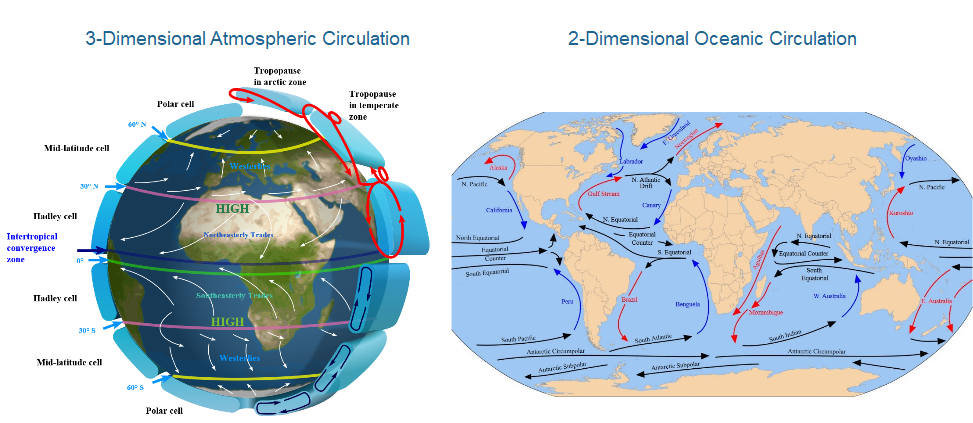
Weather should marvel any mechanical engineer with interest in the thermal fluids side of the curriculum.  All weather conditions are driven by temperature differences in the atmosphere and it’s influenced heavily by ocean temperatures to the west from which prevailing winds and jet stream flow, at least in the northern hemisphere.  It’s a massive thermodynamic, fluids, and heat transfer model.

What is causing this year’s massive tornadic outbreak?  Unusually cold mid and upper atmosphere derived from cyclically cold Pacific waters.

The two best weather guys I’ve seen in the business are Tom Skilling from WGN and Joe Bastardi from AccuWeather.com.  Bastardi is a historian and doesn’t get whisked away with the hype.  He states the mid levels of the atmosphere have cooled very rapidly in the past year as it did 60 years ago.  Did you know this?  No.  Why?  Because nobody is reporting it.  This makes sense because powerful storms, which are like engines, are driven by great temperature differences; NOT an overheating atmosphere.

Tornadoes form when warm air from the southeast plows into cold air from the northwest.  The warm, moist air rises into the cold mid levels of the atmosphere, and of course what goes up, must come down.  Condensing water vapor turns to rain and if cold and turbulent enough develops hail falling to the ground cooling the air as it falls.  This air flow can become strong enough to cause straight line downdrafts that can flatten buildings and trees like a tornado.  When the warm air channels, it can become like the vortex in your bathtub or sink.  It will start to rotate to form a tornado.  For a great cartoon of this, click here.  For the real deal, see this minute-long video from National Geographic – devastating.

Fortunately, the pattern that set up these storms in the south just broke over the weekend.  Hopefully, we won’t get our turn in the north but it’s certainly possible.  The jet stream, or line between cold and warm air has lifted far north, hence the warmer weather we are experiencing in the north.

All engines, including power plants, your car’s engine, jet engines, are driven by hot and cold sinks.  The greater the temperature difference, the greater the power, and efficiency.  A tornado is an engine. It is driven by temperature differences in the atmosphere and the “load” is the destruction it wreaks on the ground.  When towns like Joplin, MO appear to be run over by a giant lawnmower, the giant lawnmower requires tremendous power, delivered by an F4 or F5 tornado.

This presents an opportunity to generate electricity.  No; not from tornadoes, but from waste heat being dumped from power plants.

I would guess that when anyone thinks of a nuclear plant, they think of these cooling towers.  These towers work on a very simple concept.  Warm water from the power plant is pumped to the top and showered down through the tower.  Openings at the bottom let in cool dry air from the surroundings.  The warming and humidifying of the air causes it to rise and a natural draft occurs.  Therefore, fans are not needed.  Towers need to be tall enough and shaped like they are to generate sufficient air flow via “stack effect” to provide required cooling capacity.

This presents an opportunity to generate electricity.  Not just from the vertical rise in the tower, but all the way to the upper atmosphere.  If rotation were induced, an engine could be developed between the hot exhaust and the always very-cold upper atmosphere – a standing tornado, essentially.

Don’t laugh.  I first came across this in one of the power industry’s trade magazines a year or two ago, and it made a lot of sense.  It’s called an atmospheric vortex engine.  Here is a good paper on the topic from the Canadians, ay?

So I ask, why is the DOE not pursuing something like this, rather than the STUPID electric car?  Silly me.  This is potentially cost effective energy efficiency with huge potential from a ubiquitous plentiful source of free waste energy; not an ALICE IN WONDERLAND pipe dream.  If we can build nuclear reactors and sophisticated huge steam turbines, surely this simple concept can be harnessed.

Seventy percent of energy required to fuel a thermal power plant (natural gas, coal, nuclear, fuel oil) is dumped to the surroundings.  Think of the potential – and nothing extraordinary is required.  Nature takes care of the vast temperature difference to drive the engine.  The efficiency of this second heat engine would be approximately 30% per the above paper.  This could take conventional power plant efficiency from the standard 30% to roughly 50%, roughly a 70% increase.  This is enormous.

Tidbits

I’ve always considered global warming to be driven by politics and self interest, knowingly or unknowingly – as in, I can make money from this.  It is fanned by sensational films like that described in the aforementioned Dumb Bear post, Al Gore (who’s film the UK banned from its schools) and even National Geographic – it sells – see how it works?  It’s easy.  More below.

The very cold spring and gobs of snow this winter have been devastating.  Dude!  Aspen reopened for skiing over the Memorial Day weekend – with more base now than it had on New Years Day!  This is normal?  It’s insane!  Mammoth Mountain in the Sierras still has 200-plus inches of snow – plan to ski through July 4!

How does paranoia void of logic and reason perpetuate?  The Center for Decision Sciences at Columbia Business School did a survey of 1,200 in-duh-viduals, “Those who felt that the current day was warmer than usual for the time of year were more likely to believe in and worry about global warming than those who thought it was cooler outside. They were also more likely to donate the money they earned from taking the survey to a charity that did work on climate change.”  Even if INDOORS is hotter, people tend to fear global warming more!

In other findings: if you eat soup frequently, check with an emotional counselor; want that job, wash your hands in hot water just prior to interview; worried about crime, get out of dodge when it’s hot outside.

written by Jeffrey L. Ihnen, P.E., LEED AP

Home Field Disadvantage

Energy Efficiency, Government0 comments

As mentioned on these pages before, stuff that doesn’t work well for me will be tolerated for maybe a couple bad experiences before I move on to something else.  When something starts to go haywire, you don’t want to be around me and you certainly don’t want your children around me.  Probably the worst thing to go haywire is a computer because I know I can’t take my frustration out on the computer since that will obviously make things worse, so the vocabulary gets a little extra spicy.

Back in about 1983, I was shopping for my first car.  Growing up in rural America farm country, 90% of vehicles on the road were made by the big three, now known as the big one and the incompetent and crappy two.  One of the vehicles I test drove among the several Detroit models was a Honda Accord.  This was back when they were the size of today’s Civic Coupe.  I remember it to this day.  It was like the first decent micro or import beer I tested, although I can’t remember what that was if you know what I mean.

The Accord was unlike anything I had driven before.  The suspension was firm and it handled crisply.  It accelerated very well for a car with a small engine.  It was a quite ride.  But it cost $2,000 more than my second choice at the time, a 1983 Ford Mustang so I bought that.  What a piece of junk.  This was a car that was transformed from the 70s muscle car to a wimpy plasticized rattlebox.  It always had some sort of natural frequency in the drive train that vibrated such that the rearview mirror gave me a blurred vision of where I had been.  I took Wrigley’s chewing gum wrappers and rolled them up to stuff behind the chincy dashboard cutout with a cheesy faux wood pattern to keep it from buzzing from the vibration.

Today I have very high expectations for any vehicle I own.  I bought the Acura RSX new seven and a half years ago and piled about 100,000 miles on thus far.  The only things I’ve replaced is oil, filters, tires, wiper blades, a battery, and windshield fluid.  There have been no mechanical or electrical problems but last week the engine light came on and I thought maybe my “luck” was up.  No problem.  I think it was gas-cap issue.

I have no allegiance to buying “American” stuff.  I’m an open-market competition advocate.  It’s my money and I’m going to buy what I think is the best value, including John Deere yard and garden equipment.  It’s expensive.  People have told me this or that brand is just as good.  Sure.  You go right ahead and buy your heap of lightweight, rattly sheet metal, belt-shredding, piece of crap.

In some distant precincts, or maybe its just certain buyers, there seems to be a strong home turf advantage for hiring EE consultants.  Alien firms are virtually locked out of the market.  In some cases we’ve been on projects where we needed to use local engineering firms because they know the market, technologies, and how to handle the vastly different conditions.  Paahleeeese!  Does the first law of thermodynamics not apply on planet Z?  Does water not freeze at 32F?  Do the customers have two heads?  If so just tell us which one to talk to.  We’ll adapt to anything.

There may also be perception that if you have to get on a plane that you can’t be responsive, and that travel time and expense may cost a fortune.  Responsiveness may be an issue on the other side of the ocean seven time zones away, but not in the continental U.S.  Travel expense is also probably an overhyped disadvantage.  It takes more time to drive within some service territories to distant end users than it does to fly some places.  It takes no more time or money to fly to the coasts than it does to fly to Ohio or Missouri.  Actually, flying to coastal destinations is typically cheaper than flying a couple states away because there is far more competition.

In some cases however, there is a need to have a Johnnie on the spot and we make it so, or make it clear in a proposal that we will make it so.  The latter doesn’t seem to work.

Programs that lock out alien firms are doing their ratepayers no favors.  They lock out innovation, new ideas and possibly more efficient and effective ways of doing things.  When we bid on local jobs, we take nothing for granted.  I feel we deserve nothing for merely being one of the closest firms.  Once hired regardless of where, it is our mission to have the client so pleased they wished they’d never have to go out for bids again.

In other cases, I think buyers may have something like Stockholm Syndrome and they become sympathetic to their consultant’s predictably unreliable and tardy work.  This is probably universal and not just for EE work but other consulting and even other businesses entirely.  But hey, the consultant is cheap and the buyer knows what they are getting: crap.  But there are no surprises or disappointments because expectations are lower than Brett Favre’s salvage value.

Tidbits

This just in: USA Today reports that $300 million spent on just over 600,000 appliances ($500 per appliance!!!) is achieving $27.5 million in annual energy savings.  Doing the math, that’s about an 11 year “payback” on program investment.  To put this in perspective, a rule of thumb for EE programs run by utilities is total program cost to savings ratio (“payback”) is 1.5.  Yes, the decimal point is in the right place.  Do we need further reason to lock the federal government out of EE?

The spokeswoman says energy savings were only one goal of the program.  Yes.  The other was a political payout followed by a glut of used appliances and a drought of new appliance sales.

written by Jeffrey L. Ihnen, P.E., LEED AP

Jacque – Fix My Car

Energy Efficiency0 comments

There is a running joke in our business that electrical engineers don’t know anything about energy efficiency.  It is only a joke.  One of the sharpest energy guys I have interviewed was a physics major who started on the ground floor of an energy efficiency consulting firm filling orders of equipment they also happened to sell.  In 10 years he worked his way up to really understanding how buildings and their complex systems work and he became a manager of a team of energy engineers teaching his group how buildings work and how to model them.

This article made laugh out loud.  MBAs developing energy management plans and reducing businesses’ carbon footprint.  Maybe I need an MBA to consult with my doctor prior to my next gallbladder surgery.  I can see it now.  Replace lighting in a half million square foot manufacturing plant (nothing wrong with that) and install 100 kW of photovoltaic and dedicate a focus group to reduce energy consumption.  Meanwhile there are what we call piles of cash ablaze scattered about the plant in the form of process, system, and controls waste, on both the supply and demand ends of energy consuming systems.

Beyond shutting things off and installing equipment that is more efficient than option A, energy efficiency is domain of the physical sciences.  The root of energy efficiency expertise is calculus, followed by physics, and core courses in thermodynamics, heat transfer, and fluid dynamics.  If job candidates have anything less than Bs in any of these courses we discard them as candidates.

Arm an engineering graduate with an MBA and you may have a powerful weapon to put out these fires.  An MBA could make a rousing case to embrace energy efficiency as a profit enhancer, risk reducer, and marketing tool – much better than I can.  But there are already enough engineers in our business who don’t know what they are doing.  We evaluate their work all the time.  We don’t need political scientist MBAs cluttering up our market.  I might as well look up a culinary chef to do a wheel alignment on my car.  Jacque Pepin, are you available?

written by Jeffrey L. Ihnen, P.E., LEED AP

Water Runs Uphill – I Think Not

Energy Efficiency, Stimulus, Tax Stuff0 comments

This week – a little diversion into engineering.  Go ahead.  Shake those goose bumps out.

There are three universal laws of thermodynamics but I’m not going to explain them all now or you might fall asleep and hit your head on the table.  I will only cover one of them.

A law is essentially a theory of something that has never been disproven.  One of these laws indicates the direction of all processes.  Heat travels from hot to cold.  Water runs downhill.  However, heat can travel from cold to hot and water can go up hill if you add energy.  Think of your air conditioner and water tower.  One way to define this law is, your refrigerator won’t work unless you plug it in – add energy.

A second way to explain it is all processes are irreversible, which means, you may be able to extract energy from water flowing down hill, as in a hydroelectric dam, but it will take more energy to pump it back into the reservoir because of losses and inefficiencies.  More so, once the kinetic energy in your moving car is absorbed in your brake pads as heat, that energy won’t do anything for you.  It’s a complete loss.

Irreversibility means you can’t get more USEFUL energy out of a system than you put in.  Electricity is the most useful source of energy because it is most flexible.  You can make heat with it, turn a motor, or run your refrigerator.  I would say fuels are next as they too can be converted relatively efficiently to other forms of energy, including electricity.  Heat is the least useful.

The second law described above applies to everything and not just energy.  Consider our business of energy efficiency consulting.  If it weren’t for the second law, we wouldn’t have a job because energy efficiency would happen by itself.  Designers and contractors would know how to build absolutely the most efficient systems.  Knowledge is like energy.

Cash is like electrical energy.  The $20,000 check you write for a new car can also be used as a down payment on a house.  However, once you drive the car off the lot, it goes down in value by 10-30%, instantly.  Why?  Because you need to find a buyer and that takes energy – either from you or from a car dealer.  Labor and services are energy.

What’s the point?  The point is, artificially and rapidly increasing the cost of energy with carbon tax or cap and trade is an irreversible process too.  Some argue that increasing the cost of energy would be good for the economy.  This is like saying you can get water to run uphill without a pump.  It assumes people react rationally to the price increase by being more efficient with their processes.  If people behaved rationally, we wouldn’t need energy efficiency programs.  See above.

Consider a manufacturer’s perspective. If we raise the cost of doing business by excessively increasing energy prices, the manufacturer can do any number of things, probably some combination of all of these: pay employees less than they otherwise would, raise prices of their product (pass the cost through to the consumer), reduce energy consumption, or move offshore / across the border.  For every option I can think of, somebody has less money in their pocket.  Somebody may end up with more money in their pocket but I’m telling you, the net is less total wealth because it is an irreversible inefficient allocation of capital.

Yes, but what if the tax is  plowed back into energy efficiency?  There is overhead (losses and irreversibility) associated with that.  You have to pay somebody to run the programs, market, manage, and somebody needs to monitor the results to ensure people aren’t getting ripped off.

But Jeff, aren’t you making the case against energy efficiency programs?  Answer: no.  Why, you hypocrite?  Because cheap energy and all resources for that matter are finite and scarce.  Cash, the most valuable asset is generated through the use of resources.  At some point, resources become scarce to the point prices rise rapidly and irreversibly so.  I would therefore argue that energy efficiency programs are like the regenerative aspect of a hybrid car.  It lessens the irreversibility of resource depletion but does not eliminate it.  Spending money to save energy costs less than buying energy, uninhibited.  The tank will still run empty.  It will just take longer to get there.

The bottom line is, whatever the carbon abatement policy is, the goals cannot outrun the spread of energy efficiency knowledge throughout the economy.  Creating a “free market” with an arbitrary cap on carbon (oxymoron alert) is a bit like driving from point A to point B by stomping on the gas pedal with a blindfold on.  Let’s take the blindfold off and keep the tempest in Pandora’s Box.

See December 8 rant on energy efficiency policy.

Prospective hires – this includes a free answer to one of the quiz questions we ask during interviews.  Mention this rant and receive a bonus correct answer!

written by Jeffrey L. Ihnen, P.E., LEED AP